
Reviews

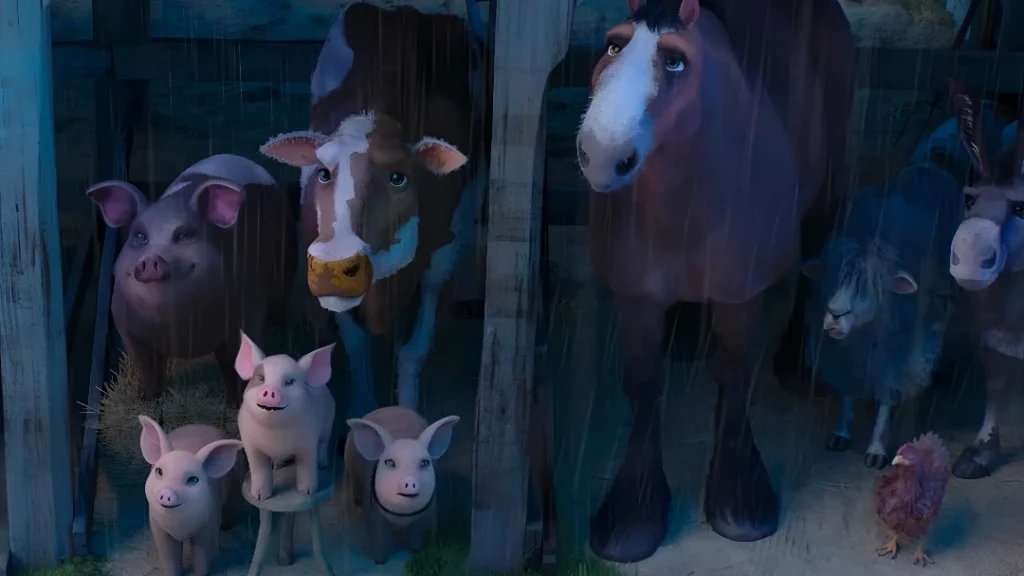
Animal Farm 2026 animated film characters from the star studded voice cast
Reviews

Animal Farm 2026 Review: Early Reactions to the Star-Studded Animated Adaptation

Animal Farm 2026 is one of the most ambitious animated films hitting theaters this year, and it arrives carrying the full weight of George Orwell’s landmark 1945 novella on its shoulders. Directed by Andy Serkis and featuring one of the most impressive voice casts ever assembled for an animated feature, the film opens in theaters on Friday, May 1, 2026. Can a family-friendly animated adaptation truly honor Orwell’s searing political allegory while reaching modern audiences? That question is exactly what has the entertainment world buzzing. What Is Animal Farm 2026? Everything You Need to Know Animal Farm 2026 is a PG-rated animated comedy-adventure film directed by Andy Serkis and written by Nicholas Stoller, based on George Orwell’s iconic 1945 novella. The film runs 1 hour and 36 minutes and is distributed in the United States by Angel Studios, which acquired the theatrical rights in December 2025 after the film premiered at the Annecy International Animation Film Festival in June 2025 and the BFI London Film Festival in October 2025. Orwell’s original novella was written as a sharp anti-Stalinist allegory, following a group of farm animals who overthrow their human owner, only to watch their revolutionary ideals crumble as the pigs seize power and replicate the tyranny they once fought against. Its themes of corruption, propaganda, and the abuse of power remain startlingly relevant in 2026, which is precisely why this adaptation has generated such intense conversation before a single ticket has been sold. Andy Serkis himself said it best at the Angel Studios announcement: “Orwell’s Animal Farm has never felt more relevant. In an age where power, propaganda, and inequality shape our societies, it’s vital that we remember his cautionary tale.” The Voice Cast of Animal Farm 2026: A Remarkable Ensemble Animal Farm 2026 boasts one of the most extraordinary animated voice casts in recent memory. The full ensemble includes Seth Rogen, Gaten Matarazzo, Kieran Culkin, Glenn Close, Laverne Cox, Steve Buscemi, Woody Harrelson, Jim Parsons, Kathleen Turner, Iman Vellani, and Andy Serkis himself. Here is a closer look at the key players. Seth Rogen as Napoleon Napoleon is the story’s central villain, a Saddleback boar who co-leads the animals’ rebellion before systematically consolidating power and transforming the farm into a dictatorship. Casting Seth Rogen, known primarily for his warm and comedic screen presence, is a genuinely intriguing creative choice. The role demands charm that slowly curdles into menace, and whether Rogen’s instantly recognizable voice can carry that arc is one of the film’s most compelling open questions heading into release. Kieran Culkin as Squealer Kieran Culkin voices Squealer, Napoleon’s slippery propagandist sidekick, whose role in Orwell’s story is to manipulate language and rewrite history in service of the pigs’ power. Fresh off his Emmy and awards momentum from Succession, Culkin brings a specific gift for playing characters who are both likable and quietly dangerous, making him one of the most exciting casting choices in the ensemble. Glenn Close as Freida Pilkington Glenn Close plays Freida Pilkington, a human corporate villain, a significant departure from Orwell’s original novella, which kept the animal and human worlds largely separate. The modernization shifts the film’s satirical target from Stalinist authoritarianism toward corporate corruption and billionaire power, and casting Close, whose history with animated villainy includes Cruella de Vil, feels both deliberate and knowing. The Supporting Ensemble Woody Harrelson voices Boxer, the loyal, hardworking horse whose fate is one of the most emotionally devastating moments in Orwell’s story. Laverne Cox voices Snowball, Napoleon’s rival and the farm’s original idealist. Kathleen Turner voices Benjamin the Donkey, the story’s cynical but ultimately clear-eyed observer. Steve Buscemi plays Mr. Whymper, Jim Parsons voices Carl, and Iman Vellani voices Puff. Andy Serkis himself steps into the role of Mr. Jones, the farm’s original human owner, alongside Randolph the Rooster. Read More: Patrick Muldoon’s Death: The Heartbreaking Loss of a 90s Television Icon The Story: How Animal Farm 2026 Updates Orwell’s Classic Source: Image courtesy of Angel Studios / Goodfellas Animation. Used for editorial commentary. Orwell’s 1945 novella told the story of Manor Farm’s animals rising up against their drunken, neglectful owner Mr. Jones, establishing a new order governed by the principle that all animals are equal. Over time, the pigs, led by Napoleon and backed by Squealer’s propaganda, erode every revolutionary ideal until the famous commandment is reduced to its most chilling form: “All animals are equal, but some animals are more equal than others.” The 2026 adaptation retains this core narrative arc while making several significant modern updates. Most notably, the film introduces human corporate villains alongside the animal characters, shifting the primary target of Orwell’s satire from Soviet-style totalitarianism to contemporary corporate power and billionaire culture. Angel Studios describes the film as tracing “how a movement for equality is systematically corrupted” as “truth is erased, dissent is crushed, and the farm descends into a ruthless dictatorship.” Screenwriter Nicholas Stoller, whose credits include Forgetting Sarah Marshall and the Muppets films, has reportedly retained the structural integrity of Orwell’s story while adding comedic and emotional texture designed to reach younger audiences alongside adults who know the source material. Variety reported that Angel acquired the U.S. theatrical rights after the film’s strong festival run. Who Is Lucky and Why Has He Been Added? Gaten Matarazzo voices Lucky, an original piglet character created specifically for this adaptation. Lucky serves as an audience surrogate, a young, idealistic character through whose eyes new viewers can enter Orwell’s world for the first time without feeling overwhelmed by its political density. His role places him “torn between Napoleon and Snowball’s teachings,” according to the film’s official synopsis, giving the story a coming-of-age dimension not present in the original novella. The decision to add a new character to such a tightly structured, beloved text is always a risk. But the creative logic is clear: Animal Farm 2026 is targeting family audiences, and Lucky provides a relatable emotional anchor for younger viewers discovering these ideas for the first time. Andy Serkis as Director: What to

A stunning performance shot of Jaafar Jackson in the Michael Movie Review.
Reviews

Michael Movie Review: A Biopic Portrait of Michael Jackson’s Life and Legacy

This Michael movie review covers one of the most anticipated biopics in recent Hollywood history. Can a single film truly capture the lightning-in-a-bottle talent of Michael Jackson? Director Antoine Fuqua takes on that near-impossible challenge, and the result is far more emotionally powerful than anyone had a right to expect. The film does not attempt to tell the complete story of Michael Jackson’s life. It is selective, carefully curated, and at times frustratingly incomplete. But within the boundaries it sets for itself, it delivers something genuinely moving and frequently spectacular. What Is the Film About? Written by John Logan and produced by John Branca, Graham King, and John Mackay, the film traces Michael Jackson’s journey from the suffocating discipline of his early Motown years through the peak of his global dominance during the Bad World Tour in 1988. The narrative deliberately stops there, and that decision has become the most debated creative choice surrounding the entire project. This Michael movie review makes clear it is not a warts-and-all biography. It is a portrait of a genius shaped by extraordinary pressure, childhood trauma, and an entertainment industry that simultaneously elevated and consumed him. Fuqua frames Jackson not as an untouchable myth but as a deeply human being caught inside one. Read More: Patrick Muldoon’s Death: The Heartbreaking Loss of a 90s Television Icon Jaafar Jackson: The Performance That Carries Everything Image courtesy of Lionsgate / Photo by Glen Wilson. Used for editorial commentary. The central performance this Michael movie review keeps returning to is Jaafar Jackson’s, and he delivers in ways that will genuinely surprise even the most sceptical viewer. As Michael’s real-life nephew, the physical resemblance is immediately obvious. What is not obvious, and what Jaafar earns entirely on his own terms, is the emotional intelligence he brings to the film’s quieter and more vulnerable scenes. The Moonwalk, the spin, and the iconic toe stand are all executed with stunning physical precision. But the moments that stay with you long after the credits roll are the smaller ones. A brief hesitation before answering a journalist’s question. The way exhaustion settles into his eyes after a particularly brutal rehearsal sequence. The involuntary flinch when his father enters a room. These details are what separate a strong physical performance from genuine embodiment. The blending of original Michael Jackson vocal tracks with Jaafar’s own voice is handled with seamless technical skill. You stop questioning it within the first ten minutes, which is precisely what needed to happen for the film to work. Joe Jackson and the Price of Perfection Colman Domingo plays Joe Jackson with an intensity that makes every scene he appears in deeply uncomfortable. That discomfort is the point. He portrays a man who genuinely believed that relentless pressure and harsh discipline were the only paths to greatness, without ever softening that belief into something the audience can easily forgive or dismiss. The rehearsal sequences from Michael’s childhood are among the most impactful scenes in the entire film. Fuqua does not dramatise the abuse for shock value. He presents it with cold, unflinching clarity, letting the audience sit inside the discomfort rather than processing it through conventional dramatic beats. It is a brave directorial choice and it pays off completely. Nia Long brings necessary warmth and quiet authority as Katherine Jackson, offering an emotional counterbalance that prevents the family dynamic from collapsing into one-dimensional darkness. Her scenes with Jaafar carry a tenderness the film earns rather than assumes. A Visual Tribute to Pop History One thing this Michael movie review cannot overstate is the cinematography. Dion Beebe shoots the performance sequences with kinetic and almost overwhelming energy. Each era of Jackson’s career, from Off the Wall through Thriller and into the Bad World Tour, is recreated with obsessive attention to period detail. The staging, lighting, and choreography by Rich and Tone Talauega combine to create concert sequences that feel simultaneously nostalgic and immediate. The recreation of the 1984 Pepsi commercial accident is handled with particular directorial care. Fuqua does not exploit the moment for dramatic spectacle. Instead he treats it as a quiet and devastating turning point, a scene where the physical and emotional toll of Jackson’s extraordinary life becomes impossible for both the character and the audience to ignore any further. One of the most fascinating behind-the-scenes facts about this production is that John Branca, Jackson’s real-life attorney and one of the film’s actual producers, is portrayed on screen by Miles Teller. That unusual overlap between real history and dramatised narrative gives the film a layer of authenticity that most biopics simply cannot manufacture. How the Film Handles the Controversies Any honest Michael movie review has to address this directly and without evasion. The film ends its timeline in 1988, before the allegations that defined and severely damaged Jackson’s later public life. This decision has divided critical opinion sharply and is unlikely to satisfy everyone. Some argue it represents deliberate avoidance, particularly given the serious questions raised by the Leaving Neverland documentary. Others read it as a focused narrative choice that allows the story to honour Jackson’s artistic peak without becoming a legal drama or a moral referendum. The honest critical assessment is that it is probably both things simultaneously. The Jackson estate’s involvement in the production, including access to irreplaceable archival footage and music rights through Prince Jackson, inevitably shaped the narrative’s boundaries. That is a legitimate criticism and this Michael movie review does not shy away from it. For a broader critical perspective on this debate, The Hollywood Reporter’s coverage provides valuable and detailed context. What the film does well is acknowledge the underlying tension without pretending it does not exist. The closing title card hinting at a possible sequel reads less like a triumphant conclusion and more like an honest admission that this particular story remains unfinished. The Supporting Cast Miles Teller brings quiet authority and genuine credibility to John Branca. His scenes ground the film’s more spectacular musical moments in commercial and legal reality, reminding

A visually seductive scene from the Agon Movie Review featuring high-tech athletic training.
Reviews

Agon Movie Review: A Brutally Honest Look at the Cost of Elite Sport

This Agon movie review covers one of 2025’s most daring debut films. Italian director Giulio Bertelli does not make the kind of sports film you are used to watching. There is no triumphant finish line. No slow-motion medal moment. What Bertelli delivers instead is a controlled, deeply unsettling study of elite athletes pushed beyond what the human body should reasonably endure. If you are a fan of ambitious, thought-provoking cinema, this one demands your full attention. What Is Agon About? Agon is set inside a fictional hyper-technological Olympic environment where athletes are constantly monitored, measured, and reduced to performance data. The film follows three central athletes, each collapsing under a different kind of pressure. Bertelli treats the human body not as something to celebrate but as a subject under investigation. That clinical approach is what separates this film from every conventional sports drama released in recent years. Read more: Michael Movie Review: A Soulful and Heartbreaking Look at the King of Pop Direction and Vision Bertelli brings a rare background to this project. His experience as a professional sailor and his work with Muccio Prada gave him a designer’s understanding of precision and structure. Every frame of Agon reflects that. He is not here to inspire you. He is here to show you exactly what inspiration costs. The film sits far closer to body horror than to traditional sports drama. Fans of Darren Aronofsky’s Black Swan or Claire Denis’s Beau Travail will immediately recognise the language Bertelli is speaking. If you enjoy those films, you can read our breakdown of the best arthouse sports films of the decade here. Cinematography That Gets Under Your Skin Cinematographer Mauro Chiarello’s work in this Agon movie review worthy film is shot with surgical precision.. Medical sequences are deliberately drained of colour, rendered in near-monochrome to reflect the cold reality athletes face behind closed doors. Competition footage, by contrast, bursts with intense and almost violent colour. The contrast is purposeful. Chiarello builds a visual argument about the gap between public spectacle and private suffering, and he makes that argument without a single word of dialogue. One scene stands above everything else. A sharpshooter sits alone in a hotel room the night before competition. Bertelli holds on her face for nearly three unbroken minutes. No score. No movement. Just silence and the faint tremor in her jaw. It is the most quietly devastating scene in any film released this year. The Three Athletes at the Heart of Agon Source: Image courtesy of The Match Factory / Photo by Sofija Zobina. The three athletes at the heart of this Agon movie review each represent a different kind of collapse. Alice Bellandi carries the film’s most physically confronting segment. Her storyline includes real operating room footage that transforms the sports film into something approaching medical documentary. It is hard to watch and impossible to look away from. Alex Sokolov, portrayed by Sofija Zobina with extraordinary restraint, faces a social media scandal that strips her identity down to nothing. Her fencing accident near the end reframes every scene that came before it. Yile Vianello represents the film’s philosophical core. Her arc argues that control in elite sport is always an illusion, and the moment an athlete believes otherwise is precisely when everything falls apart. Score and Sound Design Composer Tom Wheatley makes a bold choice throughout Agon: he scores the silence rather than the action. His music functions as ambient interference, subtle enough to feel subconscious. The sound design follows the same logic, building atmosphere through the creak of orthopaedic bracing, the hum of medical equipment, and the hollow acoustics of empty training halls. Together, sound and score create a film that works on your nervous system as much as your emotions. Read more: Lee Cronin’s The Mummy Review: A Terrifying and Masterful Modern Nightmare Editing and Production Editors Tommaso Galone and Francesco Roma handle three narratives that each operate at different rhythms. The Bellandi sequences are patient and long-take. The Vianello segments are cut more frantically to mirror her mental state. The fact that these co-exist in one coherent film without ever jarring is a significant achievement. Agon is backed by MUBI, whose curatorial reputation for challenging, high-quality cinema adds important context. You can explore the full MUBI catalogue for similar titles at mubi.com. (external outbound link) The platform’s credibility lends this debut the audience it deserves. Does Agon Have Any Weaknesses? This Agon movie review would not be complete without honesty about where the film falls short. Bertelli’s screenplay leaves some emotional threads unresolved in ways that feel less like intentional ambiguity and more like underdevelopment. Viewers who need a degree of closure may find the ending frustrating rather than provocative. The film is also an uncompromising watch. Its runtime of one hour and forty minutes feels longer because Bertelli demands active engagement in every scene. This is not background viewing. Final Verdict This Agon movie review lands firmly in strong recommendation territory, with one important caveat: know what you are walking into. Agon is not a comfortable film. It is not designed to be. Bertelli has crafted a debut that refuses to glamorise sacrifice, refuses to reward suffering with triumph, and refuses to let you leave the cinema feeling reassured. This Agon movie review confidently recommends Bertelli’s debut to anyone who values serious cinema. That refusal is exactly what makes it extraordinary. Quick Facts This Agon movie review rates the film 4 out of 5 stars. Director: Giulio BertelliCinematography: Mauro ChiarelloComposer: Tom WheatleyEditors: Tommaso Galone and Francesco RomaRuntime: 1 hour 40 minutesDistributor: MUBIStreaming: Available on MUBI Sources: Media Credits: Featured Image Composite by Clip Cinema Hub. Includes official stills courtesy of The Match Factory and archival media via Variety. This image has been transformed for news reporting and educational review. Primary Reporting: Variety (MUBI Acquires Giulio Bertelli’s Sports-Tech Drama Agon). Official Data: MUBI Official Site (International Distribution and Streaming Details).

A haunting scene from Lee Cronin’s The Mummy Review featuring Katie Cannon transformation
Reviews

Lee Cronin’s The Mummy Review: A Terrifying and Masterful Modern Nightmare

Lee Cronin’s The Mummy Review explores a film that abandons the dusty tombs of Egypt for the claustrophobic dread of a modern family home. Directed by Lee Cronin and backed by Blumhouse Productions, this 2026 horror reboot builds on the raw intensity he introduced in Evil Dead Rise. This is not a traditional monster movie. Instead, Lee Cronin’s The Mummy Review reveals a deeply unsettling psychological horror that leans into trauma, grief, and the eerie folklore of changelings. The film replaces ancient curses with something far more intimate: the terror of a loved one returning… changed. From Ancient Egypt to Albuquerque: A Bold Reimagining At the heart of Lee Cronin’s The Mummy Review is the story of Katie Cannon, a young girl who vanishes without a trace, only to return eight years later under disturbing circumstances. Her reappearance is not a reunion. It is the beginning of a nightmare. The Transformation Cronin reinvents the Mummy through a chilling “bog-person” aesthetic: This version of the creature feels less like an ancient deity and more like a deteriorating human body, making it deeply uncomfortable to watch. Compared to earlier interpretations like The Mummy or the original The Mummy, Lee Cronin’s The Mummy Review highlights how radically the film subverts expectations. Read more: Emily Blunt Schiaparelli Gown: 5 Stunning Secrets Behind This Bold Gravity-Defying Look The Visceral Body Horror of Lee Cronin’s The Mummy Review Source: Photo by Arjen Tuiten / R-E-N Studio (Creature and Prosthetics Design for The Mummy). Used with permission for news reporting. The film’s most talked about strength is its body horror. A standout moment involves a disturbing nail-cutting sequence that pushes viewers into full discomfort. It is slow, detailed, and impossible to ignore. Key elements that define the horror: The influence of The Exorcist is evident as the story shifts from mystery to full-scale domestic terror. A Family in Crisis: The Performances Lee Cronin’s The Mummy Review would not be as effective without its strong performances. Lead Cast Their chemistry grounds the film, making the horror feel personal rather than abstract. Supporting Cast The dynamic reflects themes Cronin explored in The Hole in the Ground, particularly the fear of losing a child to something unknown. Is This Truly a Mummy Movie A major discussion point in Lee Cronin’s The Mummy Review is whether the film can even be classified as a traditional Mummy story. Critics argue that it leans more toward possession horror than monster mythology. However, this reinterpretation is precisely what gives it relevance. Instead of ancient curses, the film explores: Read more: Beyond the Burrow: Bonnie Wright and Husband Andrew Lococo Expecting Second Child This Autumn The Evil Dead Influence and the Grand Guignol Ending Fans of Cronin’s previous work will instantly recognize his signature style. Lee Cronin’s The Mummy Review highlights: The Third Act The film builds slowly before erupting into a full “Grand Guignol” finale. Without revealing spoilers, the ending delivers: While some may find the pacing slightly extended, the buildup ultimately enhances the final impact. Final Verdict: A New Icon for Blumhouse Lee Cronin’s The Mummy Review positions the film as a bold and necessary evolution of a classic monster story. Why It Works Rating ⭐ 4 out of 5 stars For horror fans, this is not just another reboot. It is a statement about where the genre is heading. Why Lee Cronin’s The Mummy Review Matters Ultimately, Lee Cronin’s The Mummy Review proves that Lee Cronin is a master at transforming traditional horror into something deeply modern and unsettling. By shifting the focus from spectacle to psychological terror, the film creates an experience that lingers long after the credits roll. It may challenge expectations, but it succeeds in delivering a bold and unforgettable vision. Sources: Media Credits: Featured Image Composite by Clip Cinema Hub. Includes official production stills courtesy of Warner Bros. Pictures, New Line Cinema, and Blumhouse Productions. used for editorial commentary and news reporting. Primary Industry Reporting: Variety (Universal Pictures Announces Major Release Date Shifts for The Mummy 4 and Miami Vice ’85), The Hollywood Reporter (Joseph Kosinski Sets Lead Duo: Michael B. Jordan and Austin Butler to Star in Miami Vice ’85). Production & Casting Status: Deadline (Official confirmation of the period-accurate 1985 setting and IMAX technical specifications).

Scroll to Top