
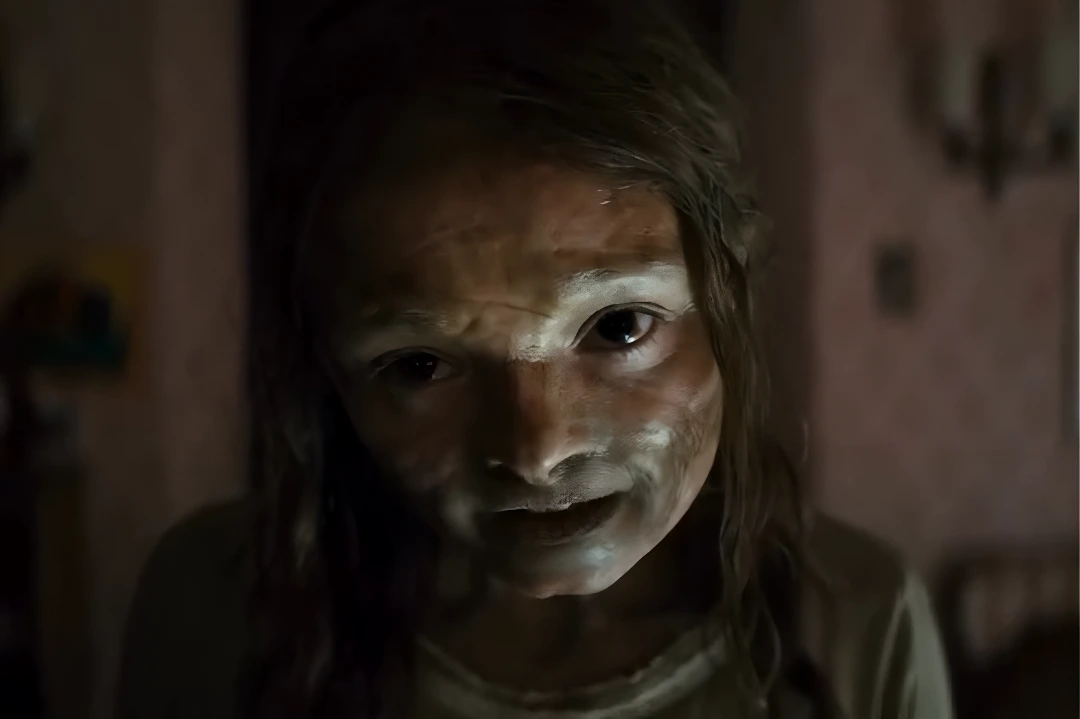
Lee Cronin’s The Mummy Review explores a film that abandons the dusty tombs of Egypt for the claustrophobic dread of a modern family home. Directed by Lee Cronin and backed by Blumhouse Productions, this 2026 horror reboot builds on the raw intensity he introduced in Evil Dead Rise.
This is not a traditional monster movie. Instead, Lee Cronin’s The Mummy Review reveals a deeply unsettling psychological horror that leans into trauma, grief, and the eerie folklore of changelings. The film replaces ancient curses with something far more intimate: the terror of a loved one returning… changed.
From Ancient Egypt to Albuquerque: A Bold Reimagining
At the heart of Lee Cronin’s The Mummy Review is the story of Katie Cannon, a young girl who vanishes without a trace, only to return eight years later under disturbing circumstances.
Her reappearance is not a reunion. It is the beginning of a nightmare.
The Transformation
Cronin reinvents the Mummy through a chilling “bog-person” aesthetic:
- Decaying, earth-like skin textures
- Rough, bandage-like wrappings fused into the body
- Distorted physical features, including brittle nails
This version of the creature feels less like an ancient deity and more like a deteriorating human body, making it deeply uncomfortable to watch.
Compared to earlier interpretations like The Mummy or the original The Mummy, Lee Cronin’s The Mummy Review highlights how radically the film subverts expectations.
Read more: Emily Blunt Schiaparelli Gown: 5 Stunning Secrets Behind This Bold Gravity-Defying Look
The Visceral Body Horror of Lee Cronin’s The Mummy Review

Source: Photo by Arjen Tuiten / R-E-N Studio (Creature and Prosthetics Design for The Mummy). Used with permission for news reporting.
The film’s most talked about strength is its body horror.
A standout moment involves a disturbing nail-cutting sequence that pushes viewers into full discomfort. It is slow, detailed, and impossible to ignore.
Key elements that define the horror:
- Practical effects that feel grounded and real
- Minimal reliance on CGI
- A medical, almost clinical sense of decay
The influence of The Exorcist is evident as the story shifts from mystery to full-scale domestic terror.
A Family in Crisis: The Performances
Lee Cronin’s The Mummy Review would not be as effective without its strong performances.
Lead Cast
- Jack Reynor delivers a layered portrayal of a father struggling to accept the truth
- Laia Costa brings emotional depth as a mother torn between hope and fear
Their chemistry grounds the film, making the horror feel personal rather than abstract.
Supporting Cast
- May Calamawy adds strength and perspective as a determined investigator
- Veronica Falcón provides a sharp, memorable presence that cuts through the tension
The dynamic reflects themes Cronin explored in The Hole in the Ground, particularly the fear of losing a child to something unknown.
Is This Truly a Mummy Movie
A major discussion point in Lee Cronin’s The Mummy Review is whether the film can even be classified as a traditional Mummy story.
Critics argue that it leans more toward possession horror than monster mythology. However, this reinterpretation is precisely what gives it relevance.
Instead of ancient curses, the film explores:
- Chronic illness as metaphor
- Identity loss within families
- The fear of the familiar becoming foreign
Read more: Beyond the Burrow: Bonnie Wright and Husband Andrew Lococo Expecting Second Child This Autumn
The Evil Dead Influence and the Grand Guignol Ending
Fans of Cronin’s previous work will instantly recognize his signature style.
Lee Cronin’s The Mummy Review highlights:
- Sudden, high-impact jump scares
- Dark humor woven into tense moments
- A gradual escalation toward chaos
The Third Act
The film builds slowly before erupting into a full “Grand Guignol” finale. Without revealing spoilers, the ending delivers:
- Intense visual horror
- Emotional payoff
- A sense of complete narrative collapse
While some may find the pacing slightly extended, the buildup ultimately enhances the final impact.
Final Verdict: A New Icon for Blumhouse
Lee Cronin’s The Mummy Review positions the film as a bold and necessary evolution of a classic monster story.
Why It Works
- Reinvents a familiar concept without relying on nostalgia
- Delivers powerful performances
- Pushes boundaries with practical horror effects
Rating
⭐ 4 out of 5 stars
For horror fans, this is not just another reboot. It is a statement about where the genre is heading.
Why Lee Cronin’s The Mummy Review Matters
Ultimately, Lee Cronin’s The Mummy Review proves that Lee Cronin is a master at transforming traditional horror into something deeply modern and unsettling.
By shifting the focus from spectacle to psychological terror, the film creates an experience that lingers long after the credits roll. It may challenge expectations, but it succeeds in delivering a bold and unforgettable vision.
Sources:
Media Credits: Featured Image Composite by Clip Cinema Hub. Includes official production stills courtesy of Warner Bros. Pictures, New Line Cinema, and Blumhouse Productions. used for editorial commentary and news reporting.
Primary Industry Reporting: Variety (Universal Pictures Announces Major Release Date Shifts for The Mummy 4 and Miami Vice ’85), The Hollywood Reporter (Joseph Kosinski Sets Lead Duo: Michael B. Jordan and Austin Butler to Star in Miami Vice ’85).
Production & Casting Status: Deadline (Official confirmation of the period-accurate 1985 setting and IMAX technical specifications).